
Progressive Multi-Car Insurance — Nevada
Free to compare
Progressive Writes Multi-Car Policies in Nevada
You own two or three cars, you need one policy that covers all of them, and you want to know whether Progressive writes that structure in Nevada. Progressive does write multi-vehicle auto insurance in Nevada. The carrier offers online quoting, writes standard-tier policies, and provides SR-22 filing, non-owner coverage, and after-DUI policies when needed. Progressive holds an AM Best A+ rating and operates under NAIC company code 24260.
The structural question most households face is not whether Progressive writes multi-car policies — it does — but whether every vehicle in the household qualifies for the same-policy discount. Progressive's multi-vehicle discount applies when every car sits on one policy, titled to drivers listed on that policy, and garaged at the same address. A car titled to a household member on a separate policy, or garaged elsewhere, typically does not count toward the discount even if the household considers it part of the same insurance arrangement.
“A car titled to someone outside the household or garaged elsewhere typically does not qualify for the same-policy discount, even if Progressive insures it.”

Find Coverage That Keeps You Legal in Nevada
Get My Nevada Car Insurance Quote28 carriers
Nevada Multi-Car Carrier Roster
Nevada's roster includes 28 carriers writing auto insurance in the state, many of which write multi-vehicle policies. Progressive is one of them, alongside State Farm, GEICO, Allstate, Farmers, and 23 others. The roster size gives households comparison leverage when structuring coverage across multiple cars.
Nevada carrier roster, 2025
The Same-Policy Requirement
The multi-car discount is not automatic when a household owns multiple vehicles. It applies when every vehicle sits on the same policy. That means one policy number, one renewal date, one set of declarations, and one premium statement covering all cars. If one spouse has a policy with Progressive and the other spouse has a separate Progressive policy, those are two policies, not one multi-car policy, and the discount does not apply to either.
This structure trips up households in predictable situations. A newly married couple, each with an existing policy, assumes combining policies will save money but does not realize the discount requires canceling one policy and moving both cars onto the other. An adult child living at home with a car titled in their own name may need to be listed as a driver on the parent's policy and have the vehicle added to that same policy for the discount to apply. A household with one car garaged at a vacation property or second address may find that vehicle ineligible for the same-policy discount if the garaging address differs from the primary policy address.
Progressive's online quote tool allows you to add multiple vehicles during the quoting process. The system calculates the multi-vehicle discount at that point, showing the combined premium with the discount applied. If you already hold a Progressive policy and want to add a second or third car, you contact Progressive directly or use the online account portal to add the vehicle mid-term. Adding a vehicle mid-term re-rates the entire policy, not just the new car, because the multi-vehicle discount recalculates across all vehicles.
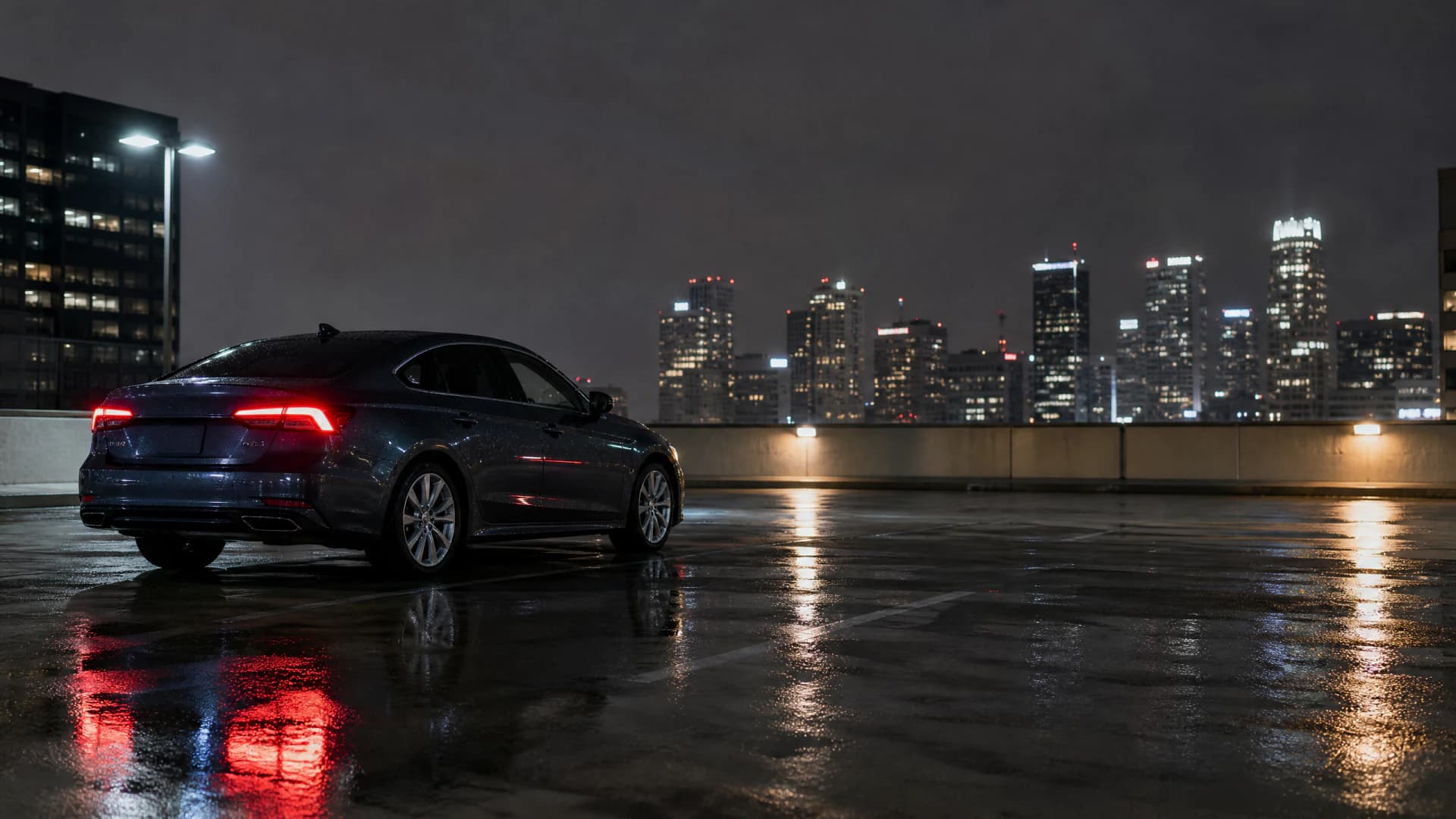
A car titled to someone outside the household or garaged at a different address typically does not qualify for the same-policy multi-vehicle discount, even if Progressive insures it.
Related Articles





How Adding a Vehicle Re-Rates the Policy
Adding a second or third car to an existing Progressive policy does not simply add a flat amount to your premium. The entire policy re-rates. Progressive recalculates the premium for every vehicle on the policy, applies the multi-vehicle discount to the new total, and issues a revised premium. The result is not always intuitive. A household adding a low-value older car may see a smaller total premium increase than expected because the multi-vehicle discount percentage applied to the new total offsets part of the added cost. A household adding a high-value sports car or a vehicle driven by a young driver may see a larger increase because the new vehicle's individual risk profile pulls the entire policy's rating up.
The re-rating happens at the moment you add the vehicle. If you add a car mid-term, Progressive calculates the new premium, prorates it for the remaining term, and either bills you for the difference or credits your account if the change lowers the premium. The new premium structure carries forward to the next renewal. This means the best time to add a vehicle is immediately after purchase, not at renewal, because waiting leaves the new car uninsured or forces you to start a separate temporary policy that cannot later merge into the multi-car discount structure without canceling and rewriting.
Nevada law requires proof of insurance at vehicle registration and during traffic stops. Progressive provides an insurance ID card for each vehicle on the policy. When you add a vehicle mid-term, Progressive issues a new ID card for that vehicle immediately, and you must carry it in the car. The card shows the policy number, the vehicle identification number, the coverage effective date, and the expiration date. Nevada DMV accepts electronic proof of insurance, so you can store the ID card image on your phone, but the card must display current coverage for the specific vehicle being registered or stopped.
$25,000 / $50,000 / $20,000
Nevada Minimum Liability Limits
Every vehicle on a Nevada multi-car policy must carry at least $25,000 per person for bodily injury, $50,000 per accident for bodily injury, and $20,000 for property damage. These are statutory minimums; many households with multiple vehicles carry higher limits to protect household assets if one vehicle causes a serious accident.
Nevada Revised Statutes

Comparing Progressive Against Nevada's Carrier Roster
Progressive is one of 28 carriers writing auto insurance in Nevada. The roster includes State Farm, GEICO, Allstate, Farmers, Liberty Mutual, Nationwide, Travelers, USAA, and 20 others. Not every carrier writes multi-vehicle policies with the same discount structure or the same willingness to insure households with mixed driver profiles. State Farm and USAA write preferred-tier multi-car policies but restrict eligibility: State Farm through agent discretion, USAA through military-affiliation requirements. GEICO, Progressive, and Allstate write standard-tier multi-vehicle policies with online quoting and no affiliation restrictions.
The structural advantage of comparing multiple carriers is that each prices multi-vehicle risk differently. One carrier may offer a larger percentage discount on a higher base rate; another may offer a smaller discount on a lower base rate. The household with the lowest total premium is not always the carrier advertising the largest discount. The only way to identify the lowest total premium for your specific household — your vehicles, your drivers, your garaging address, your coverage selections — is to quote the same coverage structure across multiple carriers and compare the final premium after all discounts apply.
Next Step: Compare Carriers for Your Household
Progressive writes multi-car policies in Nevada, but so do 27 other carriers, and the lowest premium for your household depends on how each carrier prices your specific vehicles, drivers, and coverage selections. Use the comparison tool on this site to quote the same coverage structure across multiple Nevada carriers. Enter every vehicle you want on one policy, list every driver in the household, and select the same liability limits and coverage options for each quote. The tool returns premiums from carriers writing your household structure, with multi-vehicle discounts already applied. Compare the final premiums and choose the carrier that delivers the coverage you need at the lowest total cost for all cars combined.
Nevada Minimum Liability and Multi-Car Coverage
The state does not require personal injury protection or uninsured motorist coverage, but many multi-car households add uninsured motorist coverage because Nevada's uninsured rate sits at 11.1 percent. That means roughly one in nine drivers on Nevada roads carries no liability insurance. If an uninsured driver hits one of your vehicles, uninsured motorist coverage pays your medical bills and vehicle damage up to your policy limits. Without it, you file a claim against the at-fault driver personally, a process that rarely recovers full damages when the driver has no insurance.
Progressive allows you to structure coverage differently across vehicles on the same policy. You can carry liability-only on an older car with low market value and full coverage — liability plus collision and comprehensive — on a newer financed vehicle. The multi-vehicle discount applies to the entire policy regardless of how coverage is split across cars. This flexibility matters for households with a mix of vehicle ages and values, where paying for collision coverage on every car would exceed the vehicles' combined depreciated worth.
Get Your Free Quote
Get My Nevada Car Insurance QuoteFrequently Asked Questions
Does Progressive offer a multi-car discount in Nevada?
Yes. Progressive offers a multi-vehicle discount in Nevada when you insure two or more cars on the same policy. The discount applies to the total premium after all vehicles are rated together. The exact discount percentage varies by household, but the structure requires every vehicle to sit on one policy with one renewal date.
Can I add a car to my existing Progressive policy in Nevada?
Yes. You can add a car to an existing Progressive policy in Nevada by contacting Progressive directly or using the online account portal. Adding a vehicle mid-term re-rates the entire policy, recalculates the multi-vehicle discount, and issues a revised premium prorated for the remaining term. Progressive provides a new insurance ID card for the added vehicle immediately.
Does Progressive require all cars to be garaged at the same address for the multi-car discount?
Typically, yes. Progressive's multi-vehicle discount applies when all cars on the policy are garaged at the same address. A vehicle garaged at a different address — such as a vacation property or a college student's apartment — may not qualify for the same-policy discount even if Progressive insures it. Check with Progressive when quoting to confirm how a second garaging address affects the discount.
How does Progressive compare to other Nevada carriers for multi-car policies?
Progressive is one of 28 carriers writing multi-vehicle auto insurance in Nevada. Carriers price multi-car risk differently: one may offer a larger discount on a higher base rate, another a smaller discount on a lower base rate. The lowest total premium for your household depends on your specific vehicles, drivers, and coverage selections. Quote the same structure across multiple carriers to compare final premiums after all discounts apply.
What happens to my premium when I add a second car to my Progressive policy in Nevada?
Adding a second car re-rates the entire policy. Progressive recalculates the premium for every vehicle, applies the multi-vehicle discount to the new total, and issues a revised premium. The increase is not a flat amount; it depends on the new vehicle's value, the driver assigned to it, and how the multi-vehicle discount percentage offsets the added cost. The new premium structure carries forward to the next renewal.
Can I insure two cars on one Progressive policy if they are titled to different people?
It depends on the household relationship. Progressive typically allows vehicles titled to different household members — spouses, parents and children living together — on one policy as long as all drivers are listed and all vehicles are garaged at the same address. A vehicle titled to someone outside the household or living elsewhere usually requires a separate policy and does not qualify for the same-policy multi-vehicle discount.